





With its “Next-Gen Superyacht” concept and the completion of the 114-metre project “Elf”, German Naval Yards is signalling a renewed focus on the superyacht segment. CEO Rino Brugge explains how a new generation of owners is shaping future yacht design and how yacht building fits into the yard’s broader strategy.
At the end of 2025, you presented the concept for the new “Next-Gen Superyacht”. It is aimed at a new generation of superyacht owners – who exactly are they? Who are these new owners, and what requirements do they place on a superyacht?
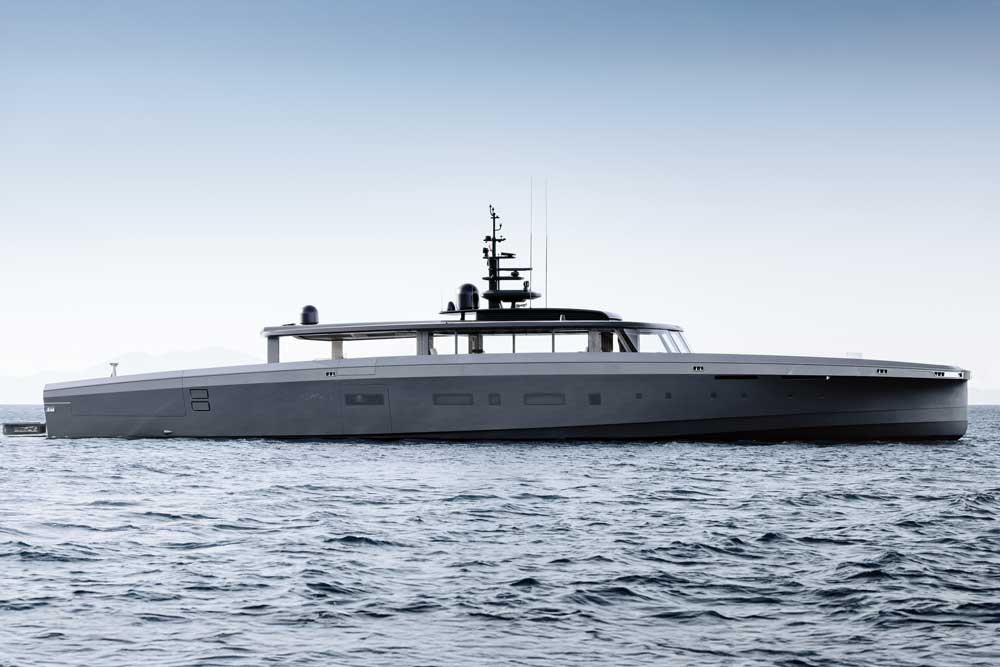
Rino Brugge: With the term “Next-Gen Superyacht”, we refer to an integrated approach that combines technological innovation, operational efficiency and tailormade luxury. Such concepts are based on hybrid and highly efficient propulsion systems, intelligently controlled energy management and high-quality, multifunctional outdoor areas. Our yacht concept KOA specifically embodies these principles: a 93metre platform with generous deck spaces, flexible living decks, a glassbottom pool and advanced technical solutions that optimise both operating costs and environmental performance without compromising on comfort.
The new generation of owners combines high expectations in terms of comfort and design with a strong focus on sustainability, efficiency and functionality. They are often entrepreneurs and technology experts who value transparent operating costs, low emissions and smart system integration. At the same time, they expect individual, scalable concepts: yachts that can be flexibly configured for private use, hosting large events or serving as a platform for specialised activities.
In addition to the new yacht concept, you also announced at the end of last year that you would complete the 114-metre yacht project “Elf”. These two announcements mark your shipyard’s first yacht activities after a longer pause – the delivery of “Sailing A” took place almost eight years ago. Are these projects part of a new corporate strategy? Can we expect further yacht projects from your yard in the future?
Brugge: Absolutely. The decision to complete the 114-metre project “Elf” is an integral part of our strategic direction. This includes both strengthening our expertise in the superyacht segment and continuing to deliver sophisticated naval projects. We regard yacht building as a long-term growth path and are making targeted investments in capacities and partnerships. We are currently in discussions with several interested clients, so you can expect further yacht projects from our yard in the future.
As the name German Naval Yards suggests, you build naval vessels. How do yachts and naval ships fit together? Are these areas where synergies exist and collaboration takes place, or are these business units separated within your company?
Brugge: Although the name “German Naval Yards” initially points to naval shipbuilding, yacht construction and naval shipbuilding complement each other very well in our company. Both areas are based on the same core competencies: highly complex shipbuilding, project management, the highest quality standards and a powerful industrial infrastructure. Our shipyard has large dock capacities, heavy-lift cranes and modern production halls. These are ideally suited for the construction of both sophisticated superyachts and complex military shipbuilding projects. Through this close integration, both areas benefit from one another, enabling us to ensure the highest standards in both yacht and naval shipbuilding.
Interview: Anna Wroblewski
If you would like to learn more about the yacht activities of German Naval Yards, explore the latest edition of HANSA Yachts!