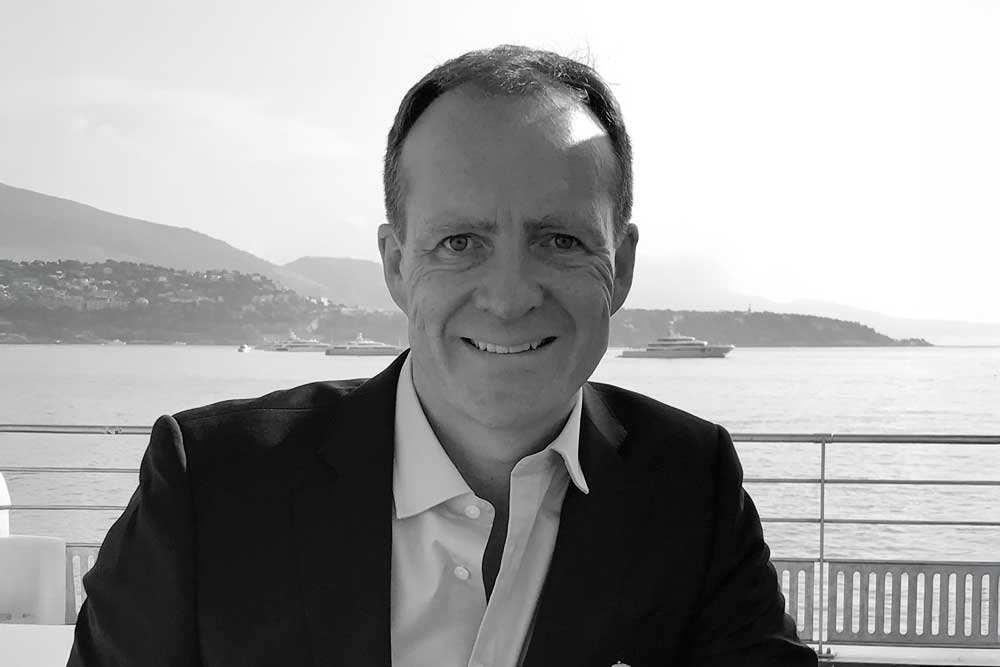





Not maximum power, but minimum noise: in superyacht construction, onboard comfort is becoming an increasingly important priority. In an interview with HANSA Yachts, Hendrik Bruns explains the role that low-noise, low-vibration manoeuvring systems play in this trend and how Jastram is responding to the growing demand.

Superyacht construction is among the most demanding sectors of shipbuilding. Owners have high expectations – not only regarding design and interior styling, but also the technical equipment on board. Every yacht is a one-off, featuring individually developed solutions. One topic, however, is becoming increasingly important: the reduction of noise and vibration.
One of the specialists in this field is Hamburg-based Jastram. Speaking to Hendrik Bruns, Director Sales & Marketing, the company explains how modern manoeuvring systems are evolving to meet rising comfort expectations in yacht construction.
The roots of the family-owned company date back to 1889, when Carl Jastram founded a metalworking workshop in Hamburg. This later developed into the Hamburger Motorenfabrik Carl Jastram. Today, the company is run by the fourth generation of the family and specialises in marine propulsion and manoeuvring systems.
Jastram’s business today is built around four core areas: bow thrusters, rudder propellers, turbocharger overhauls and servicing.
“Our turbocharger overhaul business dates back to the time when we designed and built our own combustion engines,” Bruns explains. Since delivering its first bow thruster in 1955, however, Jastram has focused primarily on manoeuvring systems.
The product portfolio is complemented by a global service business. To support this, the company maintains an international network of agents and certified service partners. Both theoretical and practical training is provided at the company’s Hamburg-Bergedorf headquarters.
“We want to ensure that our customers receive the same high standard of service anywhere in the world,” says Bruns.
With its portfolio, Jastram serves almost every vessel type – from harbour launches and government and naval vessels to offshore support ships, merchant vessels and yachts. Its bow thrusters cover an output range from 50 W to 1.2 W, while its rudder propellers range from 50 to 450 kW.
Alongside series-produced equipment, the company also delivers numerous customer-specific projects. In the yacht sector in particular, almost every solution is tailor-made.
Air against cavitation
One of Jastram’s main development priorities is noise reduction. With its Active Noise Reduction (ANR) system, the company has developed a technology that significantly reduces cavitation noise generated by bow thrusters.
The system injects air directly into the bow thruster tunnel. According to Bruns, this reduces cavitation noise generated during operation and significantly improves onboard comfort. The system is suitable both for newbuilds and for retrofitting existing installations.
All stages of the project – from concept development and engineering through to commissioning – are carried out in-house. Depending on the vessel’s design, the system can reduce noise levels by around 15 dB(A), Bruns says.
Another advantage is that the ANR system is not limited to Jastram bow thrusters.
“The interesting thing is that we can also offer the system for installations from other manufacturers. We can integrate Active Noise Reduction into third-party equipment,” says Bruns.
Tailor-made solutions
Particularly in the yacht sector, bespoke solutions are in high demand. “Almost every installation is a tailor-made solution that we develop together with the shipyard and according to the owner’s requirements,” Bruns explains.
A typical yacht project consists of a bow thruster combined with the ANR system. In addition, the thruster is mounted using a double resilient mounting system. This integrates the thruster into the vessel’s structure in a way that significantly reduces the transmission of vibration and structure-borne noise into the hull.
Depending on the size of the yacht, up to two bow thrusters and two stern thrusters may be installed to further improve manoeuvrability. Jastram implemented such a configuration on a yacht exceeding 10,000 T. In this project, particular attention was paid to optimising the propellers, intake geometry and other components to achieve the lowest possible noise levels.
Regardless of the scope of supply, Jastram offers flexible delivery options. Complete plug-and-play solutions are available, allowing the system to be put into operation immediately after connection to the power supply. Alternatively, the company can supply individual components only or integrate its own products into systems delivered by other manufacturers and shipyards.
Comfort remains the defining trend
For Hendrik Bruns, onboard comfort will remain one of the defining trends in superyacht construction. The goal, he says, is to bring the level of comfort people enjoy at home onto a yacht.
“Our ambition is to continuously develop our systems and take onboard comfort to a new level. Quieter yachts with lower vibration levels not only create a more exclusive experience for owners and guests, but also make an important contribution to protecting the marine environment by reducing underwater noise emissions.”
Interview: Anna Wroblewski