





Water treatment specialist BIO-UV Group has supplied its BIO-SEA ballast water treatment system to French shipbuilder Chantiers de l’Atlantique for installation aboard the first in a series of Accor-operated luxury sailing yachts.
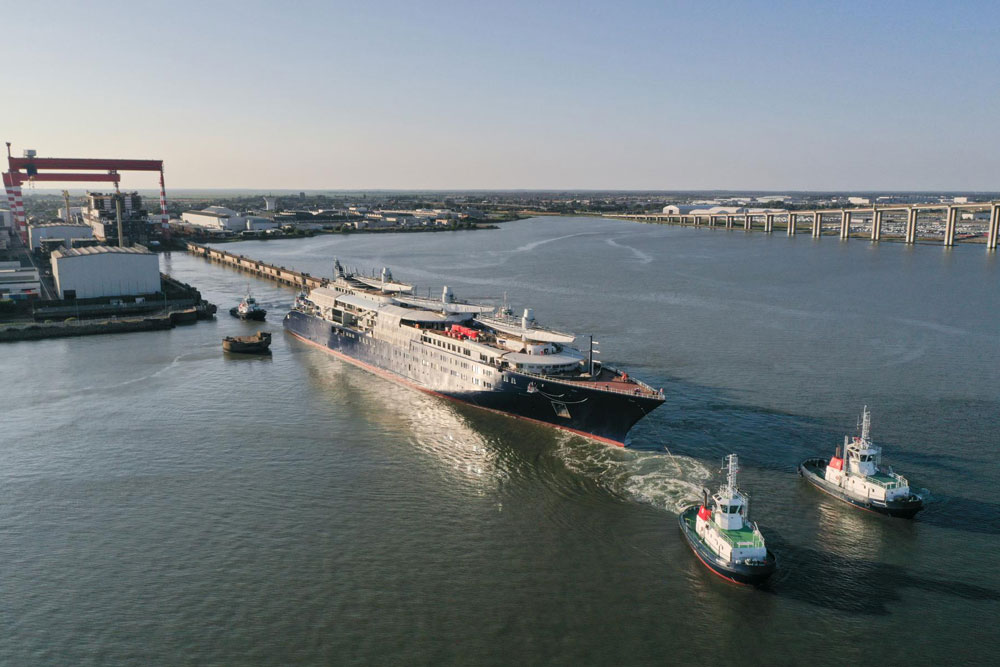
Factory acceptance trials for the chemical-free BIO-SEA B01-0135 unit were successfully completed, with installation aboard the first Orient Express Sailing Yachts vessel taking place at the St. Nazaire shipyard. The vessel was floated out on 16th June 2025.
Sustainable technology for a new generation of sailing vessels
When the yacht enters service next year, the UV-based BIO-SEA system will be treating water flow rates of up to 135 m³/h. A sister vessel, scheduled for delivery in 2027, will also be fitted with a similar B-type BIO-SEA unit.
At 220 m (722 ft) long and with a gross tonnage of 26,200 GT, Orient Express will be the world’s largest contemporary sailing yacht and the first to deploy the shipbuilder’s in-house designed SolidSail wind sail system. This system features three 100 m tall lightweight masts, each rigged with 1,500 m² Solid Sail/AeolDrive rigid but foldable sails.
Commenting on the significance of the order, Maxime Dedeurwaerder, BIO-UV Group’s Sales Director for Solutions, explained that it underscores not only the shipowner’s commitment to decarbonisation, but also BIO-UV Group’s focus on sustainability.
“Our ballast water treatment systems resonate with environmentally conscientious shipowners and builders because of the compact, low energy consuming reactor technology we have developed. The BIO-SEA ‘B’ unit for the Accor ships, for instance, needs only one UV reactor, optimising space and energy efficiency without compromising ballast water treatment performance,” he said.
Chemical-free ballast water treatment with lifetime support
Arnaud Le Joncour, Senior VP Sales and Marketing at Chantiers de l’Atlantique, added: “Chantiers de l’Atlantique has good experience with BIO-UV Group’s BIO-SEA ballast water treatment systems, with more than twenty installations over the past decade. The BIO-SEA technology combines mechanical filtration and UV disinfection, providing chemical-free treatment compliant with both IMO and USCG regulations, which was an important consideration for the operational scope of the Accor sailing yachts.”
With treatment capacities ranging from 100 to 500 m³/h, the BIO-SEA B Series automatically regulates the UV dose according to water quality. Treatment performance is not affected by water temperature or salinity, and since no chemicals or active substances are used, deballasting can be carried out without harming the marine environment.
A BIO-SEA ballast water treatment system can also benefit from the company’s “warranty for life” policy, which assures ship operators of long-term reliability and performance. The warranty is valid with a three- or five-year aftermarket service agreement and is contingent on proper installation, certified maintenance, and the use of original parts from BIO-UV Group or its official network.