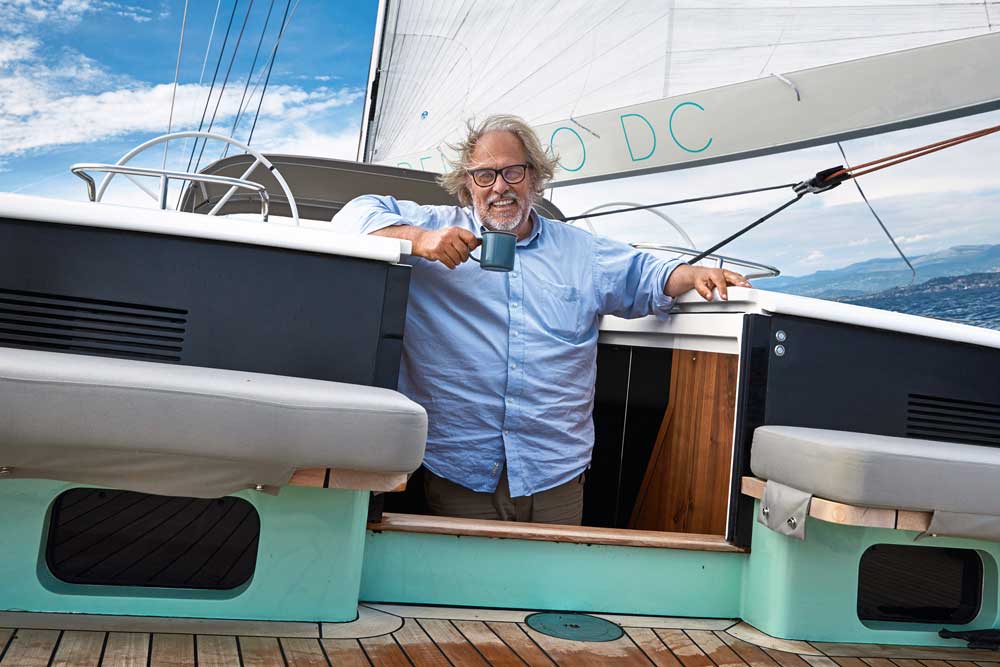






When Michael Schmidt founded YYachts ten years ago, he set out to challenge many of the conventions that had shaped luxury sailing for decades. Rather than pursuing ever more complex systems and larger crews, the German entrepreneur envisioned elegant carbon yachts that would be light, easy to handle and focused on the sailing experience itself.
A decade later, YYachts has become one of the yachting industry’s most remarkable success stories. The shipyard has delivered more than 50 yachts and established itself as a globally recognised brand, with owners in Europe, the Americas and the Middle East. Yet despite its growth, the company’s philosophy remains largely unchanged: “Keep it simple. Look good. Sail easy – The Art of Simplicity.”
The idea behind YYachts emerged from Schmidt’s own search for the ideal sailing yacht. After decades in the marine industry, he could not find a yacht that combined high performance, easy handling and understated luxury in the way he imagined. So he decided to build one himself.
This decision became the foundation of a brand that has consistently moved against prevailing trends in yacht design. While many sailing yachts have become increasingly complex and reliant on extensive onboard systems, YYachts deliberately chose simplicity. Lightweight carbon construction, intuitive handling and timeless aesthetics have become defining characteristics of the fleet.
“At YYachts, we always believed that true luxury is simplicity,” says Schmidt. “The freedom to sail without stress, without excessive crew, and without unnecessary technical complications — that was the idea from the very beginning.”
Carbon fibre has been central to this philosophy from the outset. Unlike conventional yacht construction, YYachts relies on full carbon structures to reduce weight while increasing stiffness and sailing performance. The benefits extend beyond speed. Lower displacement allows for larger sail plans, improved efficiency and easier manoeuvring, enabling owners to operate yachts between 65 and 100 feet with comparatively small crews and even in light wind conditions.
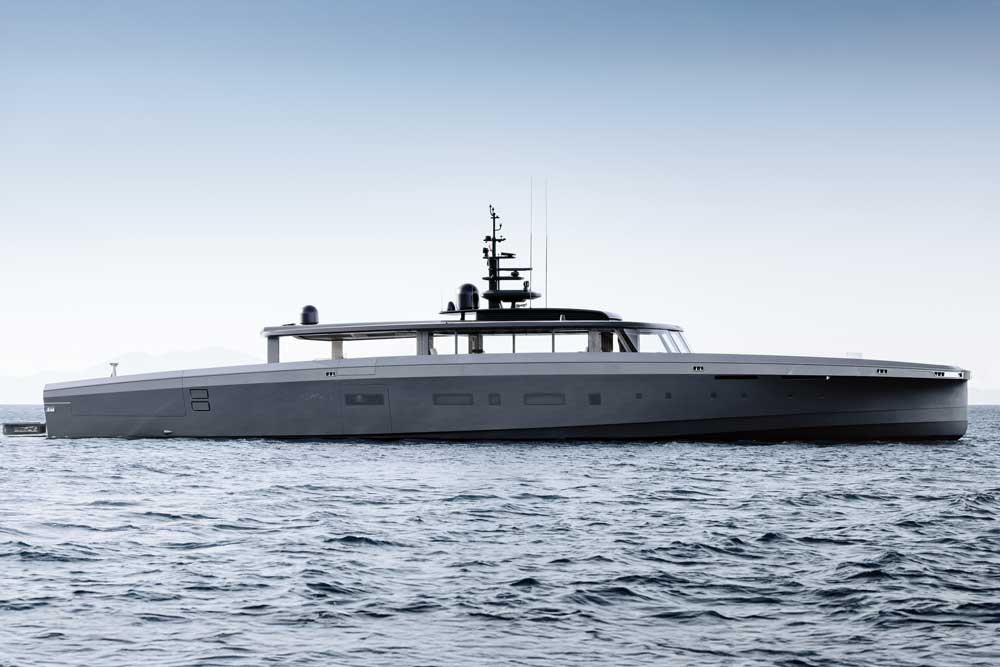
Over the years, models such as the Y7, Y8 and Y9 have become synonymous with a new form of performance cruising, combining superyacht comfort with genuine sailing capability. The redesigned Y7 and the newly introduced Y6, unveiled during the anniversary year, demonstrate how the shipyard continues to refine its core principles while expanding its portfolio.
The company has also built a reputation through collaborations with internationally renowned designers and naval architects, including Bill Tripp, judel/vrolijk & co, Norm Architects and David Thulstrup. Their interiors follow the same philosophy as the yachts themselves: minimalist, elegant and focused on natural light, spaciousness and understated luxury.
Sustainability has become another increasingly important pillar of the brand. Long before environmental considerations became a major topic in the yachting sector, YYachts focused on lightweight construction and energy efficiency. The next step in this development is already underway with the construction of the first hybrid-powered Y8, which combines electric propulsion, lithium battery technology and compatibility with low-emission HVO fuels.
“At YYachts, we believe the future of sailing should combine performance with responsibility,” Schmidt says.
The anniversary celebrations themselves underline the strong community that has grown around the brand. In June 2026, eight YYachts are set to compete in the inaugural YYachts Cup as part of the Superyacht Cup Palma Richard Mille in Mallorca. It will be the first time such a large fleet of YYachts sails together.
For Schmidt, the event is about much more than racing. “There is something emotional about seeing so many YYachts sailing together,” he says. “These yachts were created for people who truly love sailing. Watching them come together as a fleet is incredibly special for everyone involved.”
Ten years after its foundation, YYachts has not only established itself as a successful shipyard. It has also shown that simplicity, when combined with advanced engineering and elegant design, can become a defining feature of modern luxury sailing.