


The first Yacht Interior Summit has taken place at the Meyer Werft in Papenburg. Organized by Red Cabin, the event brought together designers, shipyards and industry experts to discuss changing owner expectations, sustainable technologies and future yacht concepts.
The first Yacht Interior Summit was held at the Meyer Werft in Papenburg. Organized by Red Cabin, the event brought together designers, shipyards and industry representatives to discuss current developments in the yacht sector.
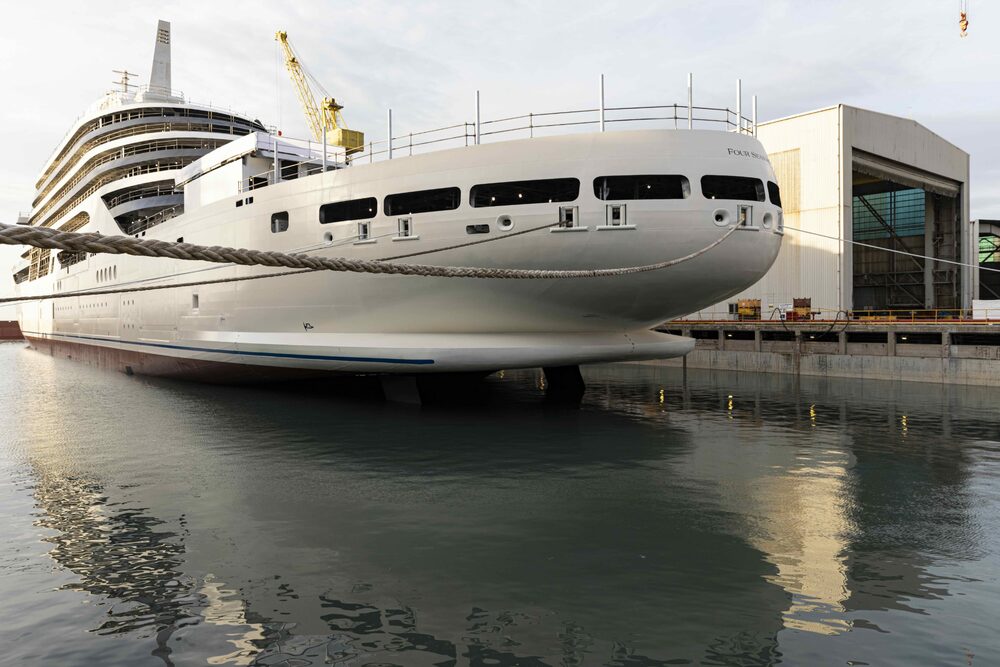
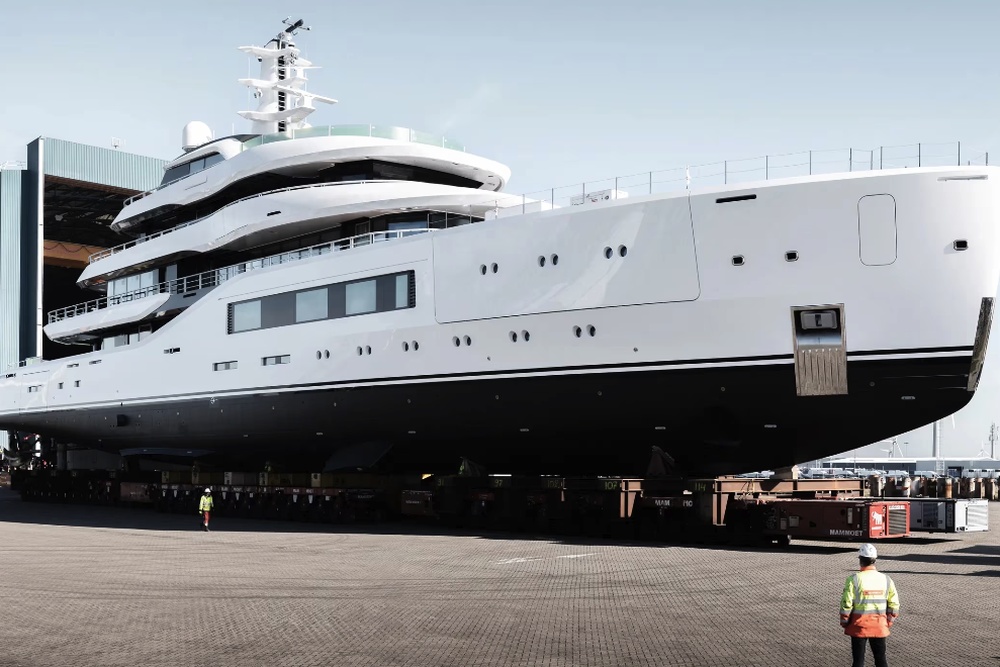
The host venue was Meyer Werft itself. Best known for building large cruise ships, the shipyard established a dedicated division for large passenger yachts, Meyer Yachts, in 2021. The division focuses on yachts with lengths of around 100 to 200 meters. This was explained by Chief Sales Officer Thomas Weigand and Head of Sales and Design Lars Kruse during their presentation.
Entering the yacht market is seen as a logical extension of the shipyard’s existing business model. The yard has the necessary capacity and can offer large yachts comparatively cost-efficiently thanks to its long-standing experience in cruise ship construction. Production is highly industrialized and based on block construction. From steel cutting to delivery, the process takes only about two years. In theory, the shipyard could deliver a vessel every six months.
Another advantage is the yard’s extensive and well-established supplier network. Around 2,000 to 3,000 suppliers are involved in building a cruise ship – a complex coordination process with which the yard has decades of experience.
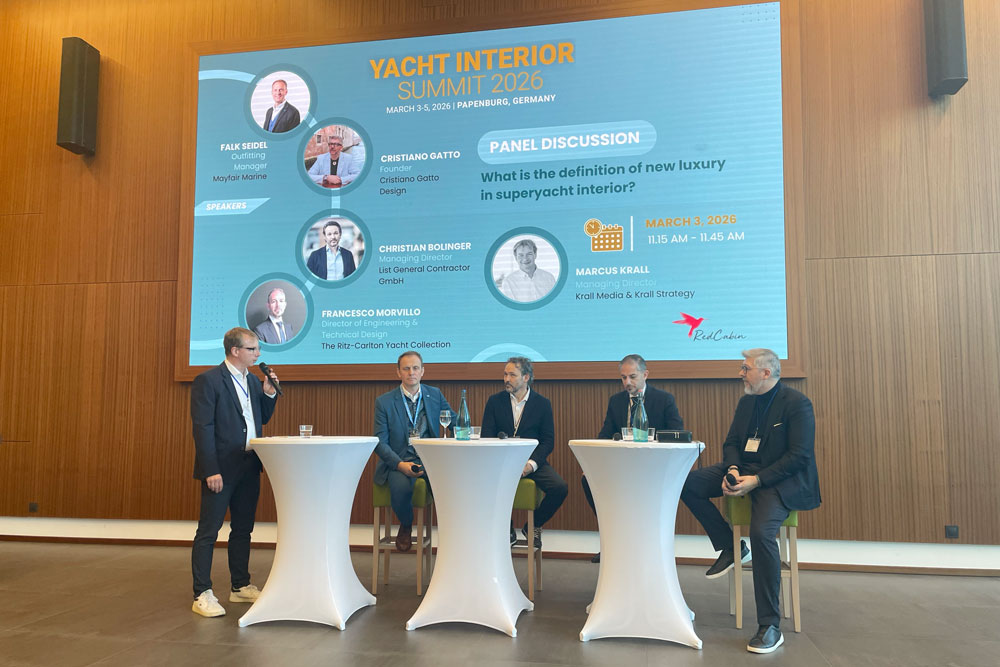
Alongside the synergies between cruise ship and yacht construction, the summit also focused on changing owner expectations. Designer Cristiano Gatto noted that as society has evolved, so too have the demands of yacht owners. Topics such as sustainability, hybrid propulsion and battery systems now play a far greater role than in the past. At the same time, the desire for a stronger connection to nature is increasing.
All participants agreed that the Covid pandemic in particular accelerated this shift. Many owners now want to spend more time outdoors and seek a closer connection with nature. As a result, new yacht designs increasingly emphasize flexible layouts and generous outdoor spaces.
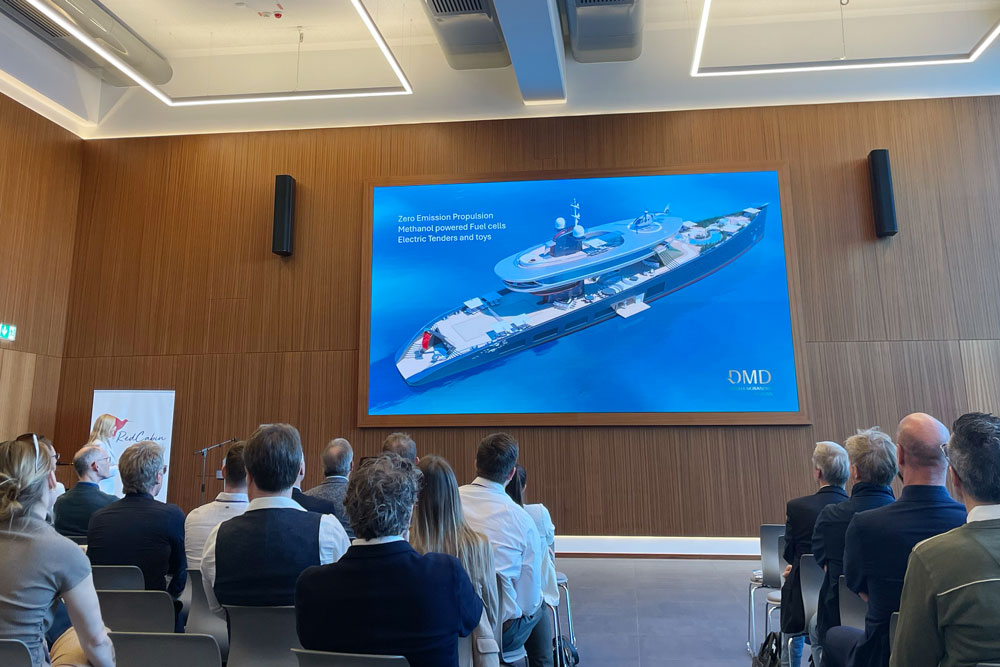
Designer Dasha Moranova presented an example of how such a concept might look. Moranova, who has previously worked on yachts such as “Eclipse” and “Dilbar”, introduced the project “Alice”, a concept tailored to the expectations of a new generation of owners.
The approximately 98-meter yacht, designed in collaboration with Lürssen, features a zero-emission propulsion concept using methanol-powered fuel cells. Open decks and spacious outdoor areas are intended to dissolve the boundaries between the yacht and its surroundings. Bright, light-filled spaces and natural colour tones define the interior design.
According to Moranova, the concept also reflects the changing mindset of owners. While the first generation primarily used their yachts as a symbol of status and the following generation focused more on adventure and experiences, today’s owners increasingly want to give something back. Sustainability and a close connection to nature therefore play an ever more important role.